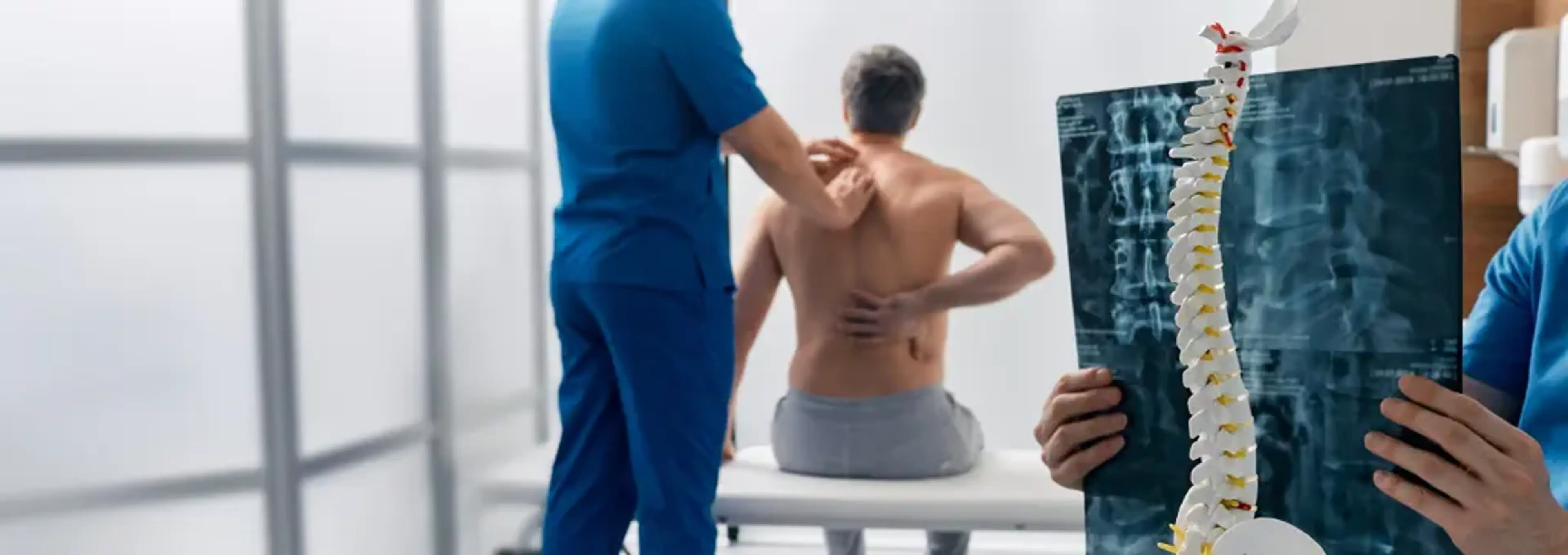
By Pyo Nasil Orthopedic Surgery Clinic — Seocho-gu, Seoul
Most people don’t realize how much they rely on their spine until the simplest movements start to hurt — bending to tie a shoelace, sitting in traffic, turning to pick up a child. At our clinic in Seocho-gu, patients often arrive looking exhausted, not just from the pain itself, but from the constant worry: “Is this a disc problem?” “Do I need surgery?” “Why isn’t rest helping?”
To be honest, most spine conditions we treat don’t require surgery. What they require is clarity — an accurate diagnosis, movement-aware care, and targeted treatment that reduces inflammation before it becomes chronic. With over 20 years of orthopedic and spine experience, we’ve found that the vast majority of patients can return to normal life through precise, non-surgical management alone.

If your back or neck pain has been lingering, getting worse, or limiting your daily activity, here’s what you should know about modern non-surgical spine treatment — and why early, targeted care makes all the difference.


Why Spine Pain Persists Longer Than Expected

why-spine-pain-persists-longer-than-expected

Spine pain tends to linger because the spine is involved in nearly every movement we make. The problem isn’t always the disc or bone. Often, it’s a combination of:

  • Inflamed soft tissue

  • Tight muscles protecting an irritated nerve

  • Small joint dysfunction

  • Compensation patterns from posture or old injuries

In Korea, it’s common for patients to endure pain for weeks while relying on heat patches, painkillers, or massage chairs. Unfortunately, these provide temporary relief but rarely address the root cause.

What many people don’t realize is that early movement guidance and targeted treatment can prevent minor irritation from becoming a long-term mechanical problem.

Common Non-Surgical Spine Conditions We See

common-non-surgical-spine-conditions-we-see

From our clinic’s experience, these are the most frequent causes of persistent spine pain:

1. Cervical and Lumbar Strain

1.-cervical-and-lumbar-strain
Neck or lower-back strain is extremely common among Seoul office workers.
Symptoms: tightness, stiffness, limited range of motion, dull aching.

2. Facet Joint Syndrome

2.-facet-joint-syndrome

When the small joints in your spine become irritated, they create deep, nagging pain — often mistaken for muscle soreness.

3. Disc Bulge or Early Herniation

3.-disc-bulge-or-early-herniation

Many people fear the word “disc,” but early herniations often respond very well to non-surgical therapy.

4. Piriformis Syndrome & Sciatica

4.-piriformis-syndrome-and-sciatica

Tight deep muscles compress the sciatic nerve, causing radiating leg pain.

5. Myofascial Pain

5.-myofascial-pain

Trigger points in the paraspinal muscles create persistent, localized knots that won’t release on their own.

6. Posture-Induced Spine Stress

6.-posture-induced-spine-stress

Long hours on phones or laptops weaken stabilizing muscles and overload the spine.

The key to effective treatment isn’t guessing the cause — it’s diagnosing it with precision.


Why Accurate Diagnosis Matters More Than Treatment Type

why-accurate-diagnosis-matters-more-than-treatment-type
One insider truth from our years of spine practice:
Most spine treatments fail not because they’re ineffective, but because they’re targeting the wrong structure.

A patient may think they have a “disc” problem, but the real issue could be:

  • A facet joint

  • A deep hip muscle

  • A stabilizing ligament

  • A nerve irritated by inflammation

  • Core imbalance causing overuse

At our clinic, we rely on ultrasound-guided examination, palpation-based movement testing, and functional assessments to differentiate these causes.

Patients often tell us, “This is the first time someone showed me exactly what’s wrong.”

That clarity alone changes the entire recovery process.


The Non-Surgical Spine Treatments That Actually Work

the-non-surgical-spine-treatments-that-actually-work
There’s no single magic treatment. The best results come from a combination of precision-based therapies tailored to the patient’s condition. Here’s what we use at Pyo Nasil Orthopedic Surgery Clinic:

1. Ultrasound-Guided Injections (Accurate to Millimeters)

1.-ultrasound-guided-injections-(accurate-to-millimeters)

These are not the “blind injections” many patients fear.

Using real-time ultrasound, we accurately treat:

  • Inflamed facet joints

  • Tight deep muscles

  • Spinal ligaments

  • Soft tissue irritation around nerves

This precision reduces pain quickly and minimizes unnecessary medication.

Many patients regain comfortable movement within days.

2. Regenerative Treatments (DNA / PDRN / Tissue Repair Agents)

2.-regenerative-treatments-(dna-pdrn-tissue-repair-agents)

Regenerative injections act like a signal telling the body:

“Wake up — repair this area properly.”

They reduce inflammation, support tissue recovery, and stabilize spinal segments without surgery.

Especially effective for:

  • Chronic low-back pain

  • Micro-tears in soft tissue

  • Repeated strain from sitting or sports


3. Manual Therapy That Resets Movement Patterns

3.-manual-therapy-that-resets-movement-patterns
Proper manual therapy isn’t “cracking the spine.”
It’s targeted, gentle correction of:
  • Misaligned soft tissues

  • Restricted mobility

  • Muscle imbalance around the spine

Patients often describe it as their body “unlocking” a movement that had been stuck for years.


4. Personalized Rehabilitation (Not Generic Stretching)

4.-personalized-rehabilitation-(not-generic-stretching)

What we do here is very different from the general stretching routines people find online.

Your spine needs stability before flexibility.

We focus on:

  • Deep core activation

  • Hip-spine coordination

  • Proper movement mechanics

  • Retraining your body’s memory

Many spine problems improve dramatically once the spine learns how to move efficiently again.

5. Activity Guidance for Real Life

5.-activity-guidance-for-real-life

Most patients don’t need to stop exercising — they just need to adjust how they move.

We help patients return to:

  • Golf

  • Pilates

  • Weight training

  • Hiking

  • Daily work activities

…without triggering the pain cycle again.

This is often the step that prevents relapse.


When Non-Surgical Treatment Is Enough

when-non-surgical-treatment-is-enough
In our 20+ years of treating spine conditions, we’ve found that surgery is rarely the first answer unless there is:
  • Severe nerve compression

  • Loss of strength

  • Bowel/bladder symptoms

  • Spinal instability

  • Progressive neurological deficit

The vast majority of patients — even those with disc bulges — recover fully with targeted, structured, non-surgical treatment.


A Patient Story That Says It All (De-identified)

a-patient-story-that-says-it-all-(de-identified)
A 39-year-old office worker came in with lower-back pain radiating into his thigh.
He had been told elsewhere he “likely needed surgery.”

After our evaluation:

  • His MRI showed a mild disc protrusion — not severe.

  • The main pain generator was actually an inflamed facet joint.

  • A combination of ultrasound-guided therapy, regenerative treatment, and core retraining resolved his symptoms within weeks.

He returned to jogging shortly after, without surgery.

Stories like this are common — and they remind patients that accurate diagnosis is everything.

Why Early Non-Surgical Care Makes a Huge Difference

why-early-non-surgical-care-makes-a-huge-difference

Here’s what we see over and over:

  • Pain that’s been present for less than 3 months responds the fastest.
  • Chronic pain from over 6 months often involves multiple compensations.
  • Non-surgical treatment works best when inflammation hasn’t fully “hardened” into scar-like stiffness.

In short:
The earlier the care, the smoother the recovery.

How to Know If It’s Time to Visit a Spine Specialist

how-to-know-if-it's-time-to-visit-a-spine-specialist

You don’t need unbearable pain to seek help. Consider a specialist evaluation if:

  • Pain persists more than 10–14 days
  • Pain radiates into the arm or leg

  • Pain worsens when sitting, bending, or turning

  • Morning stiffness lasts longer than 30 minutes

  • You feel a sharp catch during movement

  • You’re afraid the pain will “lock up” your back again

  • You’ve tried rest but the pain keeps returning

If any of these sound familiar, you’re not overreacting — you’re being smart about your spine.


A Better Path to Spine Recovery

a-better-path-to-spine-recovery
At Pyo Nasil Orthopedic Surgery Clinic, our philosophy is simple:
  • Accurate diagnosis
  • Minimally invasive care
  • Patient-first, one-doctor system
  • Guided long-term movement strategy

We help patients move again — safely, confidently, and without unnecessary surgery.

If your spine has been hurting for weeks or months, consider visiting a precision-based orthopedic clinic where your condition is evaluated directly by an experienced specialist.

Your spine can heal — it just needs the right guidance.